Advanced Rotary Pad Printing Machine: High-Speed Multi-Station Industrial Printing Solutions

Contact me immediately if you encounter problems!

All Categories

rotary pad printing machine

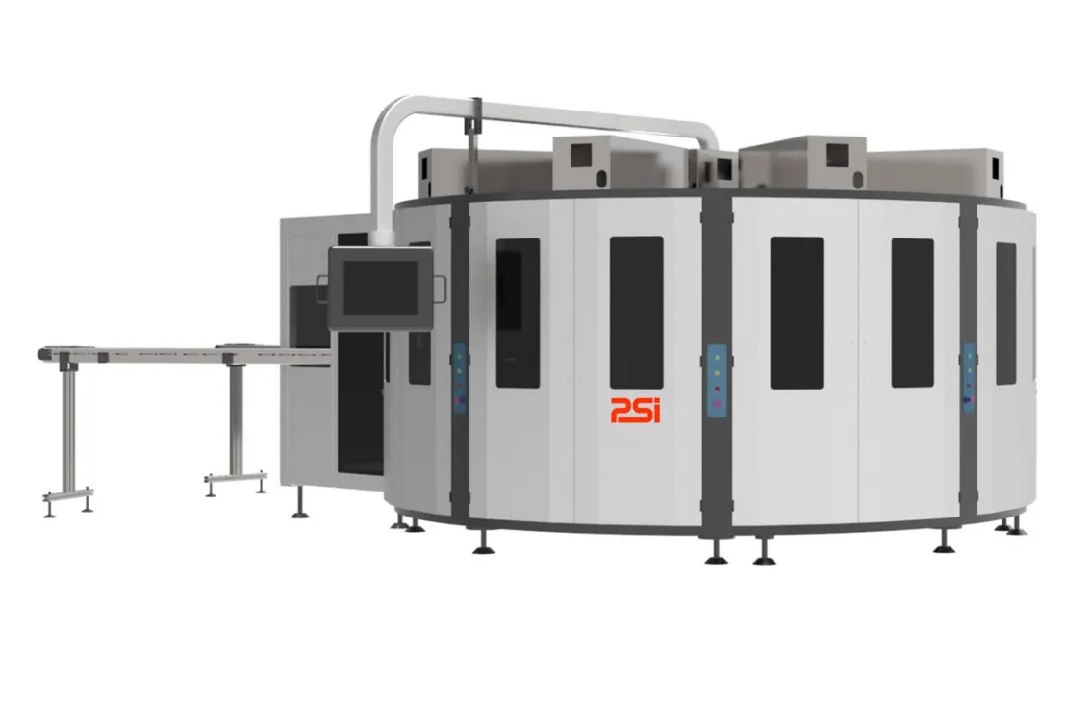
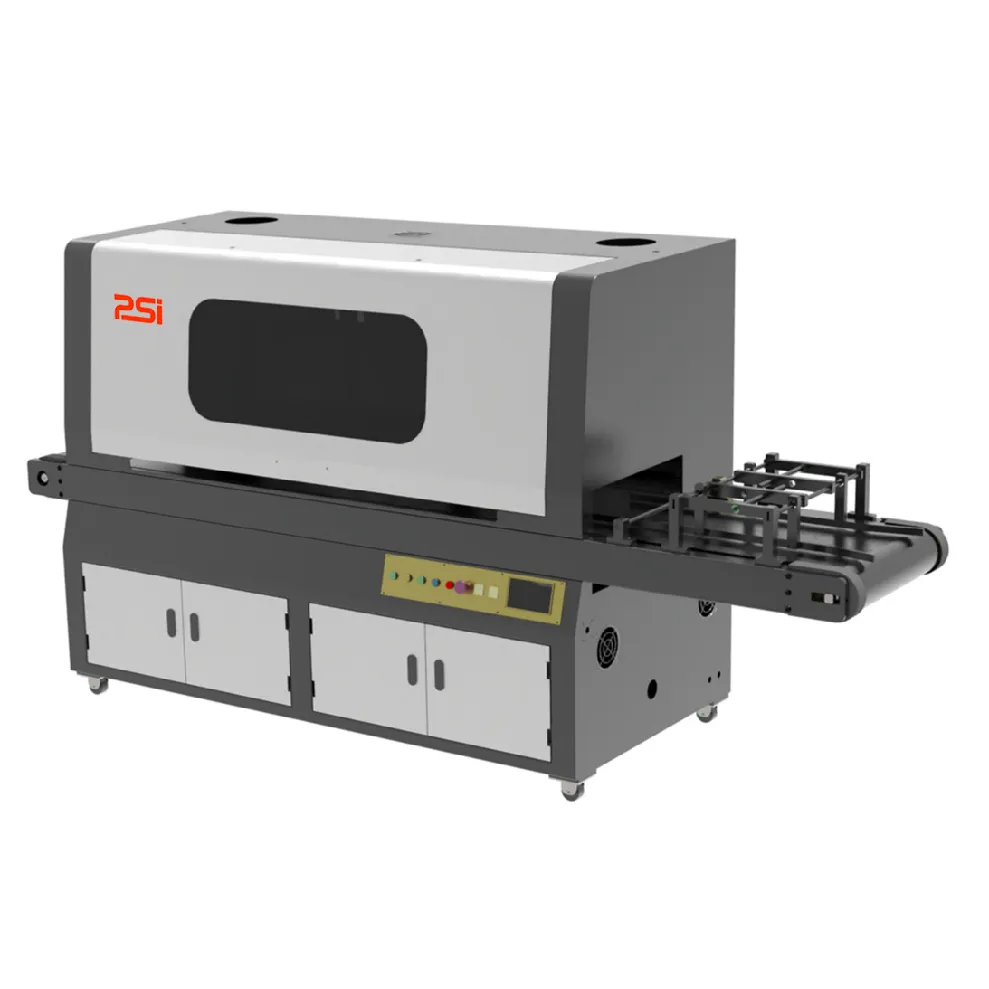
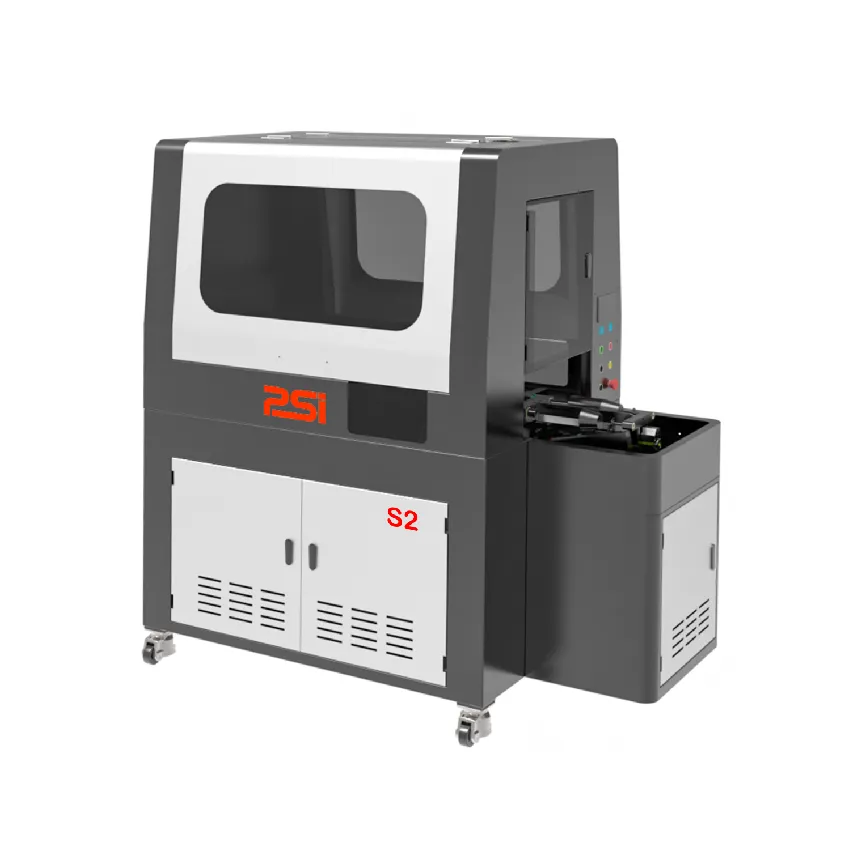
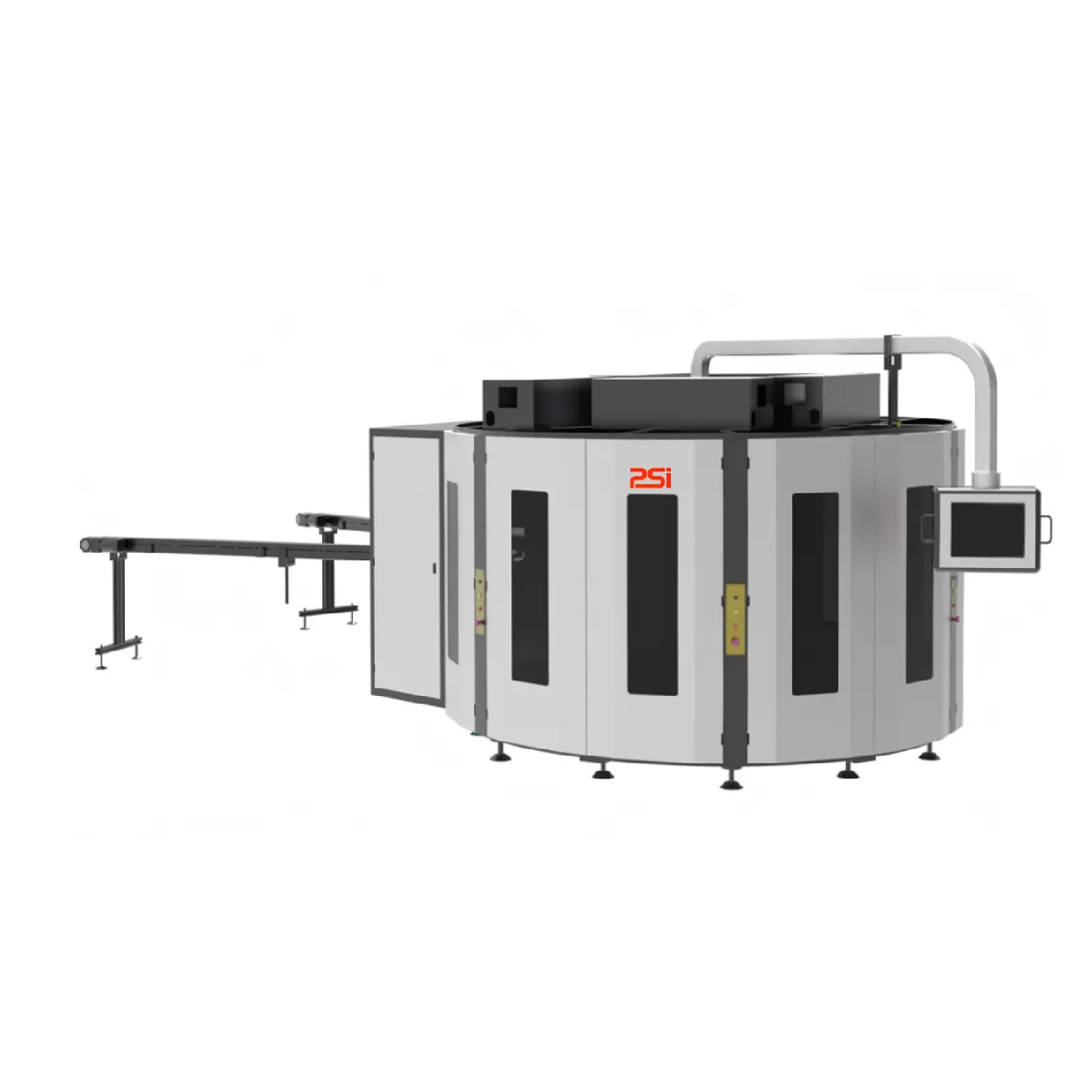
The rotary pad printing machine represents a revolutionary advancement in industrial printing technology, delivering exceptional precision and efficiency for high-volume production environments. This sophisticated printing system utilizes a rotating carousel mechanism that enables continuous operation while maintaining consistent print quality across multiple workstations. The rotary pad printing machine incorporates advanced servo-driven controls that ensure precise registration and timing throughout the printing cycle. The core functionality revolves around silicone printing pads that transfer ink from etched plates onto various substrate materials with remarkable accuracy. These machines feature multiple printing stations arranged in a circular configuration, allowing simultaneous processing of different colors or printing steps. The rotary pad printing machine supports diverse substrate materials including plastics, metals, ceramics, glass, and electronic components. Advanced ink systems provide excellent adhesion properties while maintaining vibrant color reproduction. The machine's modular design facilitates easy maintenance and quick changeovers between different printing jobs. Integrated quality control systems monitor print consistency and automatically adjust parameters to maintain optimal results. The rotary pad printing machine incorporates user-friendly interfaces with touchscreen controls that simplify operation and reduce training requirements. Built-in safety features ensure operator protection while maintaining production efficiency. The system's compact footprint maximizes floor space utilization compared to linear printing configurations. Environmental considerations include efficient ink usage and minimal waste generation through precise application control. The rotary pad printing machine delivers superior throughput rates while maintaining exceptional print quality standards that meet demanding industrial requirements.

Popular Products

The rotary pad printing machine offers substantial operational benefits that directly impact manufacturing efficiency and profitability. Production throughput increases dramatically compared to conventional printing methods, with some models achieving output rates exceeding 3,000 pieces per hour. This enhanced speed capability reduces per-unit production costs while meeting tight delivery schedules. The continuous rotation design eliminates the stop-start motion found in linear systems, resulting in smoother operation and reduced mechanical wear. Energy consumption decreases significantly due to optimized motor systems and efficient heat management throughout the printing process. The rotary pad printing machine provides exceptional versatility in handling diverse product shapes and sizes without requiring extensive tooling changes. Setup times reduce considerably through quick-change mechanisms and automated calibration systems that minimize downtime between production runs. Quality consistency improves through precise servo control systems that maintain exact positioning and pressure parameters throughout extended production cycles. The machine's compact design requires less floor space than equivalent linear systems, allowing manufacturers to maximize facility utilization. Maintenance requirements decrease due to robust construction and accessible component placement that facilitates routine servicing. Labor costs reduce through automated feeding systems and simplified operation controls that require minimal operator intervention. The rotary pad printing machine handles multiple colors simultaneously through independent ink systems, eliminating the need for multiple printing passes. Waste reduction occurs through precise ink metering systems that minimize overspray and ensure consistent coverage. Return on investment accelerates through increased production capacity and reduced operational expenses. The system's reliability ensures consistent uptime, minimizing production interruptions that could impact delivery commitments. Training requirements simplify due to intuitive control interfaces and standardized operating procedures that reduce operator learning curves.

Latest News

Enhancing Your Brand's Impact with PSI's Cutting-Edge Inkjet Digital Printing Machines

27

Sep

Enhancing Your Brand's Impact with PSI's Cutting-Edge Inkjet Digital Printing Machines

In the domain of industrial digital printing, under the commonly used terminology of the PSI Company, high-quality inkjet digital printing machines have been successfully produced and introduced to a wide range of industries. The performance of the c...
View More
PSI Cutting-Edge Digital Inkjet and Screen Printing Machines

27

Sep

PSI Cutting-Edge Digital Inkjet and Screen Printing Machines

In today's fast-paced business environment, the impact of visual communication cannot be overstated. Brands are constantly seeking ways to stand out and connect with their audience through eye-catching designs and high-quality prints. PSI, a leading ...
View More
PSI Heat Transfer Machines:  in Customized Branding Solutions

27

Sep

PSI Heat Transfer Machines: in Customized Branding Solutions

In the realm of printing and branding, PSI  stands out as a beacon of innovation and excellence. Specializing in heat transfer machines, PSI  offers a range of products that cater to various industries, from textiles to plastics, ensuring t...
View More

Get a Free Quote

Our representative will contact you soon.
Email
Name
Company Name
Message
0/1000

rotary pad printing machine

Advanced Multi-Station Carousel Technology

Advanced Multi-Station Carousel Technology

The rotary pad printing machine revolutionizes printing efficiency through its innovative multi-station carousel design that enables simultaneous processing across multiple workstations. This breakthrough technology positions printing stations around a circular platform, allowing continuous substrate movement while maintaining precise registration accuracy. The carousel mechanism incorporates high-precision servo motors that control rotation speed and positioning with remarkable accuracy, ensuring consistent print placement regardless of production volume. Each station operates independently, enabling different colors or printing processes to occur simultaneously without interference. The system's sophisticated timing controls coordinate substrate feeding, printing pad engagement, and part removal with millisecond precision. This advanced configuration dramatically increases throughput compared to traditional single-station systems while maintaining superior quality standards. The rotary pad printing machine's carousel technology accommodates various substrate sizes and shapes through adjustable fixture systems that adapt quickly to different product requirements. Automated substrate handling eliminates manual positioning errors and reduces operator fatigue during extended production runs. The circular arrangement optimizes floor space utilization, providing maximum production capacity within minimal facility footprint. Quality monitoring systems integrated into each station provide real-time feedback on print consistency and automatically adjust parameters to maintain optimal results. The carousel's robust construction ensures long-term reliability even under demanding industrial conditions, minimizing maintenance requirements and maximizing uptime. This technology particularly benefits manufacturers requiring high-volume production with multiple color applications, as the rotary pad printing machine can complete complex printing sequences in a single pass through the system.
Precision Servo Control Integration

Precision Servo Control Integration

The rotary pad printing machine incorporates state-of-the-art servo control technology that delivers unmatched precision and repeatability in industrial printing applications. Advanced servo motors control every critical movement including pad descent, lateral positioning, and pressure application with micrometer-level accuracy. This sophisticated control system continuously monitors and adjusts printing parameters in real-time, ensuring consistent results throughout extended production cycles. The servo integration enables precise speed control during pad engagement and disengagement phases, optimizing ink transfer while preventing substrate damage. Programmable pressure settings allow fine-tuning for different substrate materials and ink formulations, maximizing print quality across diverse applications. The rotary pad printing machine's servo system maintains exact registration between multiple colors through coordinated positioning controls that eliminate color misalignment issues. Automated calibration routines verify system accuracy and make micro-adjustments to compensate for mechanical wear or environmental changes. The control interface provides operators with comprehensive parameter adjustment capabilities while maintaining fool-proof operation through intelligent limit controls. Diagnostic systems continuously monitor servo performance and provide predictive maintenance alerts to prevent unexpected downtime. The precision servo control enables rapid job changeovers through stored parameter sets that recall optimal settings for different products automatically. This technology particularly benefits applications requiring tight tolerances such as electronic component marking or medical device printing where precision directly impacts product functionality. The servo system's responsiveness allows dynamic parameter adjustment during production, enabling real-time optimization based on quality feedback sensors. Long-term accuracy retention ensures consistent performance over millions of printing cycles, providing reliable return on investment through sustained quality output.
Versatile Multi-Material Compatibility

Versatile Multi-Material Compatibility

The rotary pad printing machine demonstrates exceptional versatility through its comprehensive multi-material compatibility that addresses diverse industrial printing requirements. This advanced system successfully processes an extensive range of substrates including rigid plastics, flexible films, metals, ceramics, glass, and electronic components without requiring specialized modifications. The machine's adaptive pad technology utilizes various silicone formulations optimized for different surface textures and material properties, ensuring optimal ink adhesion and transfer efficiency. Specialized fixture systems accommodate irregular shapes and complex geometries that challenge conventional printing methods, expanding application possibilities significantly. The rotary pad printing machine handles temperature-sensitive materials through controlled heating systems that maintain optimal printing conditions without substrate damage. Surface preparation capabilities integrate seamlessly with the printing process, including corona treatment for improved ink adhesion on difficult-to-print materials. The system's ink compatibility extends across solvent-based, UV-curable, and water-based formulations, providing flexibility in meeting specific performance requirements such as chemical resistance or outdoor durability. Automated substrate detection systems recognize material types and automatically adjust printing parameters to optimize results for each specific application. The machine processes components ranging from miniature electronic parts to large automotive panels through modular tooling systems that adapt quickly to different size requirements. Special handling capabilities accommodate fragile materials through gentle gripping systems and controlled movement profiles that prevent damage during processing. The rotary pad printing machine's versatility extends to multi-color applications where different materials require varying ink cure times or processing temperatures. Quality assurance systems verify proper ink adhesion and coverage across all material types, ensuring consistent results regardless of substrate complexity. This comprehensive compatibility eliminates the need for multiple printing systems, reducing equipment investment and simplifying production workflows while maintaining superior quality standards across all applications.