Color consistency is one of the most demanding quality benchmarks in high-volume production printing. When a brand places an order for thousands of meters of fabric or hundreds of thousands of packaging units, every single piece must match the approved color standard. A digital inkjet printing machine addresses this challenge directly by combining precision hardware, intelligent software, and repeatable ink delivery systems that work together to hold color output steady from the first print to the last.
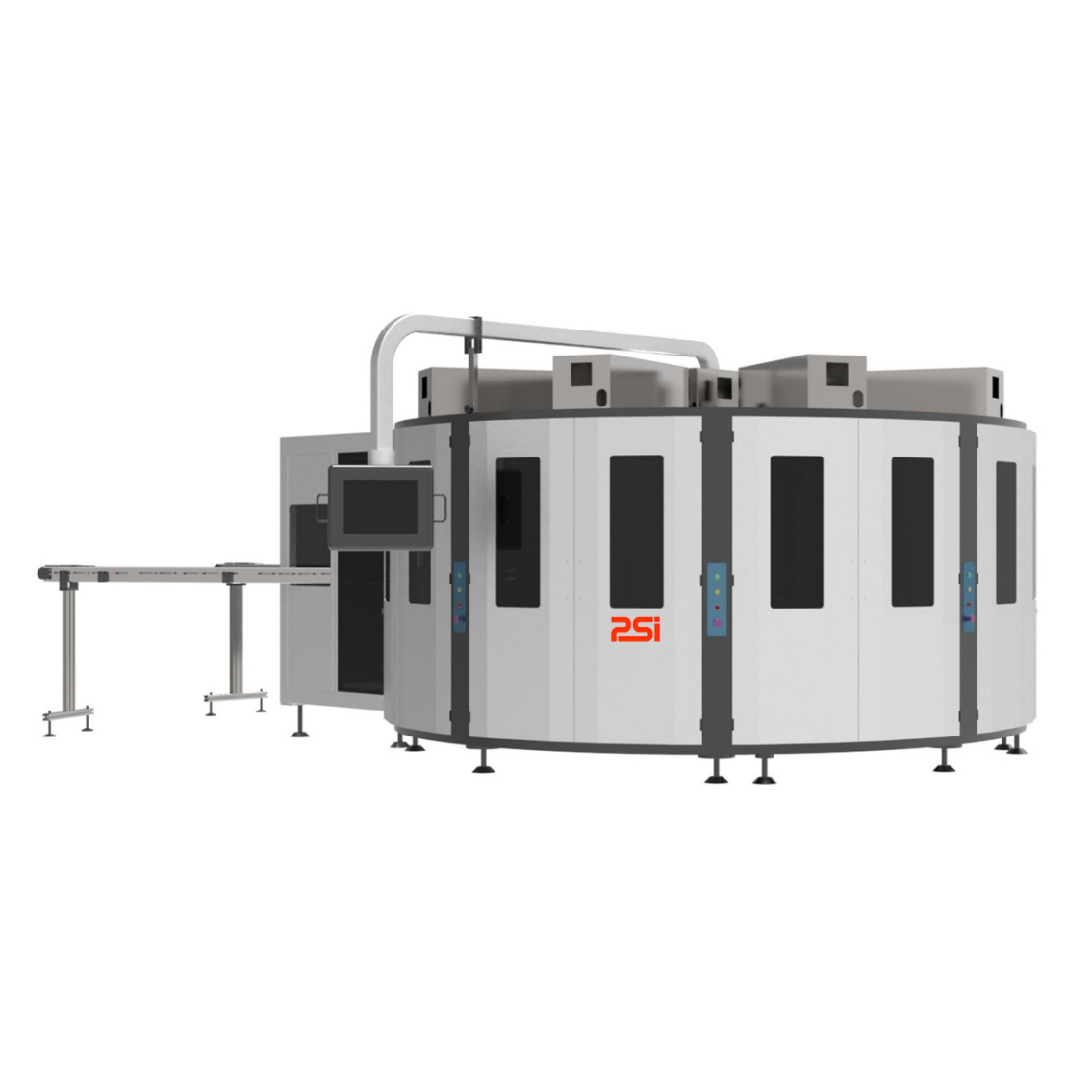
For industrial buyers, the value of a digital inkjet printing machine is not measured only by speed or resolution. It is measured by how reliably that machine reproduces an exact color profile across a large order without manual recalibration between runs. Understanding the systems inside a digital inkjet printing machine that make this possible helps procurement teams, production managers, and quality leads make smarter sourcing and investment decisions.
A professional digital inkjet printing machine uses closed-loop color management to continuously monitor and correct output during a live print run. Optical sensors scan printed output in real time and feed data back to the machine's control system. If a color value drifts outside the defined tolerance, the digital inkjet printing machine adjusts ink volume and droplet timing automatically without stopping the job. This closed-loop approach is a fundamental reason why a digital inkjet printing machine maintains consistency across orders that run into thousands of units.
The digital inkjet printing machine also stores color profiles as digital files, meaning that when an order is reprinted weeks or months later, the same ICC profile is loaded and the same output parameters are applied. This is a structural advantage that analogue systems cannot easily replicate, because analogue registration depends on physical setup that varies between operators and between sessions.
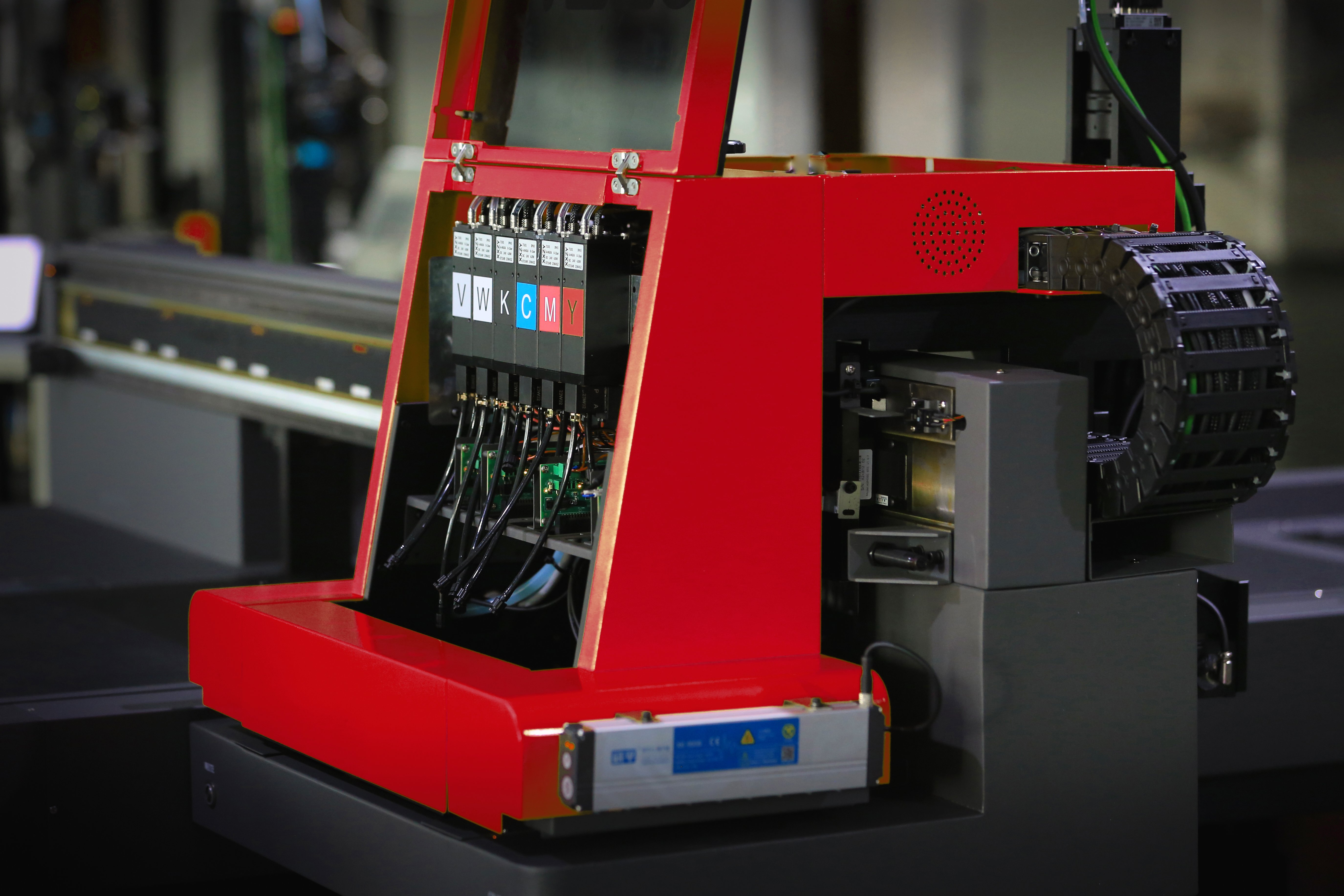
Inside every digital inkjet printing machine, the printhead array is the most critical component for color consistency. Each nozzle in a digital inkjet printing machine must fire droplets of a precisely controlled size at an exactly calculated position. When nozzle performance is uniform across the entire head array, the resulting color blends are consistent. A digital inkjet printing machine with advanced printhead compensation technology can detect clogged or underperforming nozzles and reroute ink delivery to compensating nozzles, preventing color banding or tonal shifts that would otherwise appear as defects in a large order.
Large print orders introduce variables that a digital inkjet printing machine must continuously manage. Temperature and humidity changes inside a production facility can alter ink viscosity, which in turn affects droplet formation and color density. A well-engineered digital inkjet printing machine incorporates ink temperature control systems that maintain fluid viscosity within a narrow operating band throughout the entire run. This means the digital inkjet printing machine delivers the same droplet weight at hour one as it does at hour ten, keeping color values stable regardless of ambient conditions.
Substrate variation also plays a role. Even within a single material roll, surface tension and absorbency can vary slightly. A digital inkjet printing machine designed for industrial production accounts for these variations by adjusting waveform parameters at the printhead level, ensuring that ink penetration and dot gain remain consistent across the substrate surface.
A digital inkjet printing machine relies on a stable, uninterrupted ink supply to maintain color accuracy. Bulk ink systems used in industrial digital inkjet printing machines are engineered to deliver ink at a constant pressure and flow rate. When a digital inkjet printing machine draws ink unevenly or experiences micro-interruptions in supply, the resulting prints show subtle but measurable color inconsistencies. High-grade digital inkjet printing machines address this through pressure-regulated ink delivery circuits and anti-sedimentation agitation systems that keep pigment particles uniformly suspended throughout the ink channel.
The Raster Image Processor, commonly referred to as RIP software, is the digital brain that translates a design file into precise ink placement instructions for the digital inkjet printing machine. High-quality RIP software paired with a digital inkjet printing machine allows operators to build and store substrate-specific color profiles, linearization curves, and total ink limits. Once these profiles are established, the digital inkjet printing machine applies them consistently to every repeat of the job. This software-hardware integration is one of the most powerful tools available for achieving brand-accurate color across large orders.
A digital inkjet printing machine that supports spectrophotometer-based profiling takes this further by allowing the machine to build ICC profiles based on measured printed output rather than theoretical values. When the digital inkjet printing machine profile is based on actual measured data from that specific ink set and substrate combination, color accuracy improves significantly and remains stable even as the order scales up.
Even the most advanced digital inkjet printing machine requires a disciplined maintenance routine to preserve color consistency during extended large orders. Printhead cleaning cycles, nozzle check routines, and ink path purges must be performed at defined intervals. A digital inkjet printing machine that undergoes scheduled maintenance retains predictable nozzle firing patterns, which directly translates to predictable color output. Production teams that integrate maintenance into their run scheduling find that their digital inkjet printing machine delivers measurably fewer color variation incidents across long production batches.
A digital inkjet printing machine stores color profiles, ICC data, and job parameters as digital files. When a repeat order is processed, the same profile is recalled and applied to the new run. This ensures that the digital inkjet printing machine reproduces the same color output even when the repeat job runs weeks after the original, provided the same ink type and substrate are used.
Color variation in a digital inkjet printing machine typically results from nozzle degradation, ink viscosity shifts caused by temperature changes, or inconsistent ink supply pressure. Modern industrial digital inkjet printing machines address these issues through closed-loop sensor monitoring, ink temperature control, and nozzle compensation algorithms that keep output stable throughout extended runs.
Yes. A digital inkjet printing machine paired with spectrophotometer-based profiling and high-quality RIP software can achieve very close matches to Pantone and brand-specific color standards. The accuracy depends on the ink set available in the digital inkjet printing machine, the substrate used, and the quality of the color profile. For critical brand applications, operators build substrate-specific profiles that bring the digital inkjet printing machine output within acceptable Delta-E tolerances.
 EN
EN
 AR
AR FR
FR DE
DE HI
HI IT
IT JA
JA KO
KO PT
PT RU
RU ES
ES IW
IW ID
ID VI
VI TH
TH TR
TR FA
FA
 Hot News