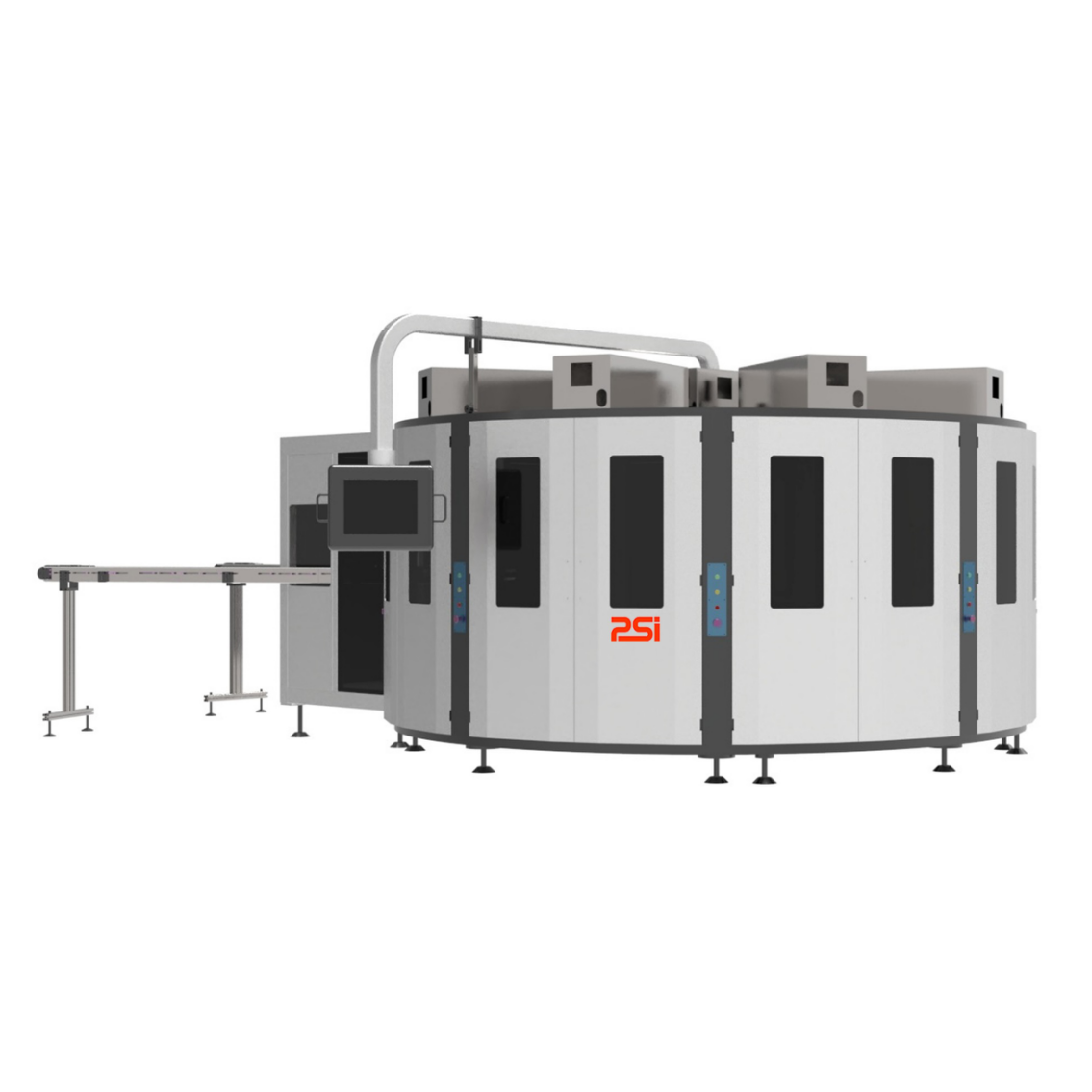
In high-volume production environments, speed is not just about how fast a screen printing machine runs at full capacity. It is also about how quickly operators can switch from one job to the next. Product changeovers — the process of transitioning between different substrates, designs, or ink configurations — represent one of the most significant sources of downtime in any print facility. A modern screen printing machine is engineered specifically to reduce this downtime, enabling teams to maintain throughput without sacrificing print quality.
Whether a facility handles short-run custom orders or long-run industrial applications, the ability to pivot quickly between different print configurations is a competitive advantage. Understanding how a screen printing machine is designed to support faster changeovers helps procurement managers, production engineers, and facility operators make better investment decisions. This article explores the key system-level features that directly reduce changeover time, improve workflow consistency, and maximize the productive uptime of a screen printing machine on any production floor.
One of the most impactful technologies in a modern screen printing machine is the all-servo drive system. Unlike older mechanical or pneumatic drive configurations, a servo-driven screen printing machine allows operators to store and recall print parameters digitally. Registration settings, squeegee pressure, print speed, and stroke length can all be saved as job profiles. When a new job begins, operators simply load the saved profile rather than manually recalibrating every parameter from scratch. This eliminates a significant portion of trial-and-error adjustment time during each changeover on a screen printing machine.
Servo motors also enable faster, more accurate repositioning of the print carriage and substrate holder. A screen printing machine equipped with servo controls can move between positions with minimal mechanical resistance, reducing both physical setup time and the risk of operator error during transitions. The result is a screen printing machine that behaves more like a programmable production tool and less like a manually tuned mechanical device.
The physical act of swapping screens is another major contributor to changeover duration. A well-designed screen printing machine incorporates tool-free or quick-release screen frame holders that allow operators to remove and install screens in seconds rather than minutes. Precision alignment pins and self-registering frame mounts ensure that a new screen slides into position with consistent accuracy. This means a screen printing machine does not require re-registration after every screen swap, dramatically shortening the time between jobs. Facilities running diverse short-run orders benefit most from this feature, since a screen printing machine with modular screen mounting can handle multiple SKU transitions in a single shift.
A screen printing machine that integrates with digital job management systems provides operators with a structured workflow for handling multiple orders efficiently. When job specifications — including substrate type, ink viscosity profile, and screen tension settings — are stored in the screen printing machine's control system, operators do not need to rely on paper-based setup sheets or manual memory. The screen printing machine can prompt the operator with step-by-step setup guidance based on the loaded job profile, reducing human error and inconsistency. This structured approach is particularly valuable when different operators run the same screen printing machine across multiple shifts.
Digital parameter recall also supports quality control during changeovers. Because each job profile defines the exact output conditions for the screen printing machine, the first print after a changeover is far more likely to meet quality standards without requiring multiple test prints. Reducing wasted substrate during startup directly improves material efficiency and makes each changeover on the screen printing machine leaner from both a time and cost perspective.
Ink changeovers are often the most time-consuming part of transitioning between jobs on a screen printing machine. Facilities that run jobs requiring different ink types — UV-curable, solvent-based, or water-based — need a screen printing machine designed with easily accessible ink zones and cleanable flood bars. Some screen printing machine designs include integrated ink circulation or containment systems that reduce cross-contamination risks and speed up the flushing process between runs. The faster an operator can clear one ink system and introduce the next, the more productive the screen printing machine becomes across a full production day.
A screen printing machine built on a rigid, vibration-dampened frame maintains consistent print registration across long runs and through multiple changeovers. When the frame of a screen printing machine flexes under operational stress, registration drift occurs — meaning that prints from the same screen printing machine may shift slightly between the start and end of a run. This forces operators to re-register more frequently, adding time and interrupting flow. A mechanically stable screen printing machine minimizes this drift, allowing teams to move from one job to the next with confidence that the machine's baseline accuracy has not changed.
Repeatability is equally important when the same job returns to the production floor days or weeks later. A screen printing machine that retains its calibration across multiple uses allows operators to recall a saved job profile and resume production almost immediately. This repeatability transforms the screen printing machine into a reliable asset for repeat orders, eliminating the cost of re-setup time on jobs that have already been optimized.
Many facilities print on a range of substrates — from rigid panels and glass to flexible films and textiles. A screen printing machine with an adjustable substrate handling system can accommodate these different materials without requiring extensive mechanical reconfiguration. Height-adjustable print beds, interchangeable vacuum platens, and programmable substrate feed mechanisms all contribute to a screen printing machine that can transition between substrate types quickly. When a screen printing machine supports broad substrate compatibility by design, changeovers involving material switches become significantly faster and less disruptive to overall production scheduling.
A servo-driven screen printing machine stores job parameters digitally, allowing operators to recall exact settings for each job without manual recalibration. This eliminates the trial-and-error phase that traditionally extends changeover time on a screen printing machine and ensures the first print after setup meets quality standards.
A rigid frame ensures that a screen printing machine maintains consistent registration across multiple jobs and changeovers. When the structure of a screen printing machine is mechanically stable, operators spend less time re-registering screens and more time producing accurate output, directly improving overall changeover efficiency.
Yes. A screen printing machine with an adjustable substrate handling system, interchangeable platens, and programmable feed settings can accommodate different substrate types within the same shift. This flexibility makes the screen printing machine suitable for facilities managing diverse short-run orders across a variety of materials.
 EN
EN
 AR
AR FR
FR DE
DE HI
HI IT
IT JA
JA KO
KO PT
PT RU
RU ES
ES IW
IW ID
ID VI
VI TH
TH TR
TR FA
FA
 Hot News