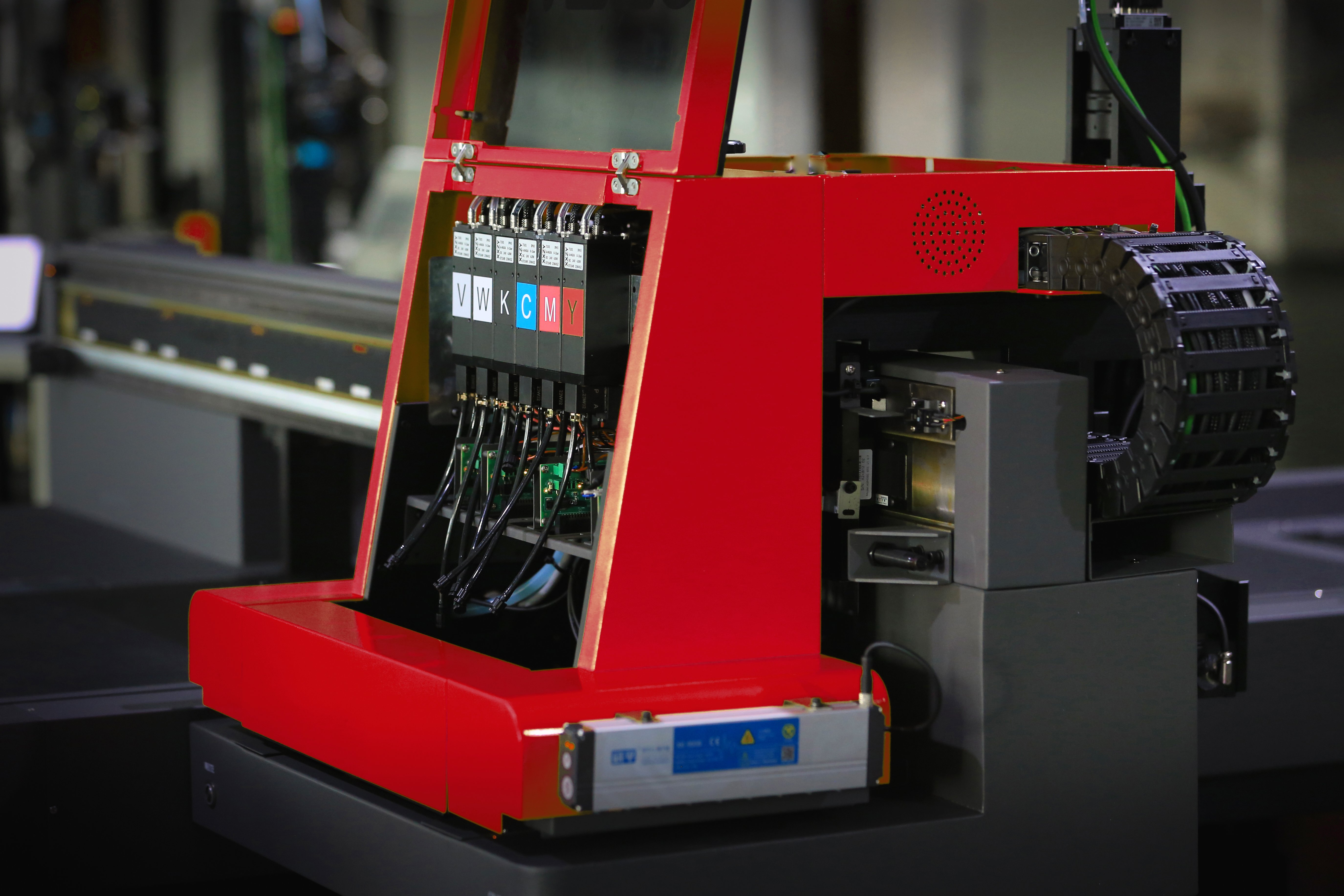
Manufacturing industries are continuously improving production methods to achieve higher efficiency, better quality control, and more flexible operations. As factories face increasing demands for customized products, shorter delivery cycles, and stable output quality, traditional production processes often struggle to meet these requirements. This has encouraged more manufacturers to adopt advanced automation technologies, including digital inkjet printing machine workflow automation.
A digital inkjet printing machine combined with automated workflow systems allows factories to connect digital design, production management, printing operations, and quality control into a more efficient process. Instead of relying on multiple manual steps, manufacturers can use digital systems to manage printing tasks more accurately and consistently.
For B2B buyers, wholesalers, distributors, contractors, architects, and engineering companies, automated printing solutions represent an important improvement in industrial production capability. A well-integrated digital inkjet printing machine workflow can help businesses reduce operational complexity, improve productivity, and provide more customized solutions for customers.
Modern factories are increasingly focused on intelligent production environments where equipment, software, and manufacturing processes work together. Digital printing automation provides a practical way for companies to optimize production workflows while maintaining reliable printing performance.
One of the main reasons factories choose automated digital inkjet printing machine workflows is the ability to improve overall production efficiency. Manufacturing companies need equipment that can reduce unnecessary steps and maximize productivity.
Traditional printing operations often require operators to complete many manual tasks, including file preparation, machine adjustment, material handling, and quality checks.
A digital inkjet printing machine with automated workflow capabilities reduces the need for repeated manual operations.
Digital files can be transferred directly into the printing system, allowing production tasks to begin more efficiently.
This reduces the possibility of human errors and helps maintain stable production results.
For factories managing multiple orders, automation makes production scheduling easier and improves resource allocation.
A streamlined workflow allows employees to focus on higher-value tasks rather than repetitive operations.
Production equipment needs to operate efficiently to provide better return on investment.
Automated printing workflows help factories reduce downtime caused by frequent adjustments and manual setup.
A digital inkjet printing machine can process different digital designs with fewer interruptions.
This allows manufacturers to handle more production tasks within the same working period.
For industrial companies, improved machine utilization helps increase output capacity without unnecessary equipment expansion.
Modern manufacturing requires flexibility because customer requirements often change quickly. Factories need systems that can adapt without creating long delays.
Traditional printing methods may require additional preparation when designs change.
A digital inkjet printing machine allows manufacturers to update designs through digital files.
Operators can modify graphics, text, and patterns without replacing physical printing components.
This makes it easier for factories to handle customized orders.
For packaging, decoration, and industrial product applications, faster design updates improve responsiveness.
Wholesalers and distributors can benefit because suppliers can provide more product variations with shorter lead times.
Many industries are moving toward smaller production quantities and personalized products.
Traditional production methods may become inefficient for small batch orders due to preparation costs.
A digital inkjet printing machine workflow allows factories to switch between different jobs more easily.
Manufacturers can produce customized batches while maintaining production efficiency.
This helps businesses serve different customer groups without increasing operational complexity.
Printing quality is a key factor affecting customer satisfaction and product value. Automated systems help factories maintain consistent results.
Manual adjustments can create differences between production batches.
Automated workflows allow printing parameters to be managed digitally.
A digital inkjet printing machine can maintain consistent settings for ink delivery, printing position, and output quality.
This reduces variations caused by operator differences.
For factories producing high-value products, stable printing performance helps protect product quality.
Production mistakes can lead to wasted materials and additional costs.
Automation helps reduce errors by controlling the printing process through software.
Digital systems can manage files, settings, and production sequences more accurately.
A digital inkjet printing machine workflow improves process reliability and reduces unnecessary rework.
For B2B manufacturers, fewer errors contribute to better efficiency and customer satisfaction.
Factories are increasingly focused on reducing waste and controlling production expenses. Printing automation helps optimize resource usage.
Traditional printing processes may require additional materials during preparation and adjustment.
Digital printing automation reduces these requirements by creating a direct connection between digital designs and production.
A digital inkjet printing machine helps factories use materials more efficiently.
Accurate printing control reduces unnecessary ink consumption and production waste.
This improves cost management and supports more sustainable manufacturing operations.
Labor resources are an important part of manufacturing costs.
Automation reduces the amount of repetitive manual work required during printing operations.
Employees can manage multiple production tasks more effectively.
A digital inkjet printing machine workflow allows factories to improve productivity without increasing labor pressure.
For large-scale manufacturers, better labor efficiency creates long-term operational advantages.
Smart manufacturing focuses on connecting machines, software, and production management systems.
Modern factories use digital platforms to manage production information.
Automated printing workflows allow designs, production schedules, and equipment operations to communicate more effectively.
A digital inkjet printing machine becomes part of a connected manufacturing environment.
This improves production visibility and helps managers make better decisions.
For engineering companies and industrial users, digital integration improves workflow coordination.
Automation systems provide better control over manufacturing activities.
Factories can monitor production progress and identify issues more quickly.
Digital printing equipment can provide information about operating conditions and production status.
This helps businesses maintain stable operations.
For manufacturers, better monitoring reduces unexpected interruptions and improves production planning.
The flexibility of automated digital printing allows factories to serve different industries.
Many industries require unique designs, product information, and decorative surfaces.
A digital inkjet printing machine supports customized production by allowing fast digital changes.
Manufacturers can provide personalized solutions without major workflow disruption.
This creates new opportunities for businesses offering specialized products.
For distributors and wholesalers, customized production capability improves supplier competitiveness.
Packaging and surface decoration industries require efficient printing systems.
Digital automation helps manufacturers create detailed graphics and consistent results.
A digital inkjet printing machine allows companies to improve packaging production speed and flexibility.
This supports businesses that need frequent design updates and customized projects.
For companies purchasing industrial printing solutions, automation provides both production and business advantages.
Customers increasingly expect faster delivery, customization, and consistent quality.
Automated printing workflows help factories respond more quickly to customer requests.
A digital inkjet printing machine improves production flexibility and supports faster order completion.
This helps businesses strengthen customer relationships.
Manufacturers compete through efficiency, quality, and innovation.
Automation helps companies improve these areas by optimizing production processes.
A reliable digital printing system can become an important part of a company’s competitive strategy.
For B2B buyers, choosing advanced equipment supports long-term business development.
Selecting a suitable supplier is an important step for factories planning to upgrade their printing operations.
A professional supplier should provide equipment that matches factory requirements.
Buyers should consider printing accuracy, automation functions, production capacity, and technical support.
A suitable digital inkjet printing machine should integrate effectively with existing manufacturing workflows.
Supplier experience and technical knowledge also influence long-term equipment performance.
Industrial equipment requires reliable support after installation.
Suppliers should provide training, maintenance guidance, and technical assistance.
This helps factories operate equipment more efficiently.
For B2B buyers, long-term supplier cooperation is an important consideration when investing in automation solutions.
Factories choose digital inkjet printing machine automation because it improves production efficiency, reduces manual processes, supports customization, and helps maintain consistent printing quality.
Workflow automation connects digital files, printing operations, and production management systems. This reduces setup time, minimizes errors, and improves machine utilization.
Yes. Automated digital printing workflows allow factories to change designs quickly and produce different product variations without complicated preparation processes.
Manufacturers should evaluate printing accuracy, automation capability, material compatibility, equipment reliability, supplier experience, and technical support.
 EN
EN
 AR
AR FR
FR DE
DE HI
HI IT
IT JA
JA KO
KO PT
PT RU
RU ES
ES IW
IW ID
ID VI
VI TH
TH TR
TR FA
FA
 Hot News