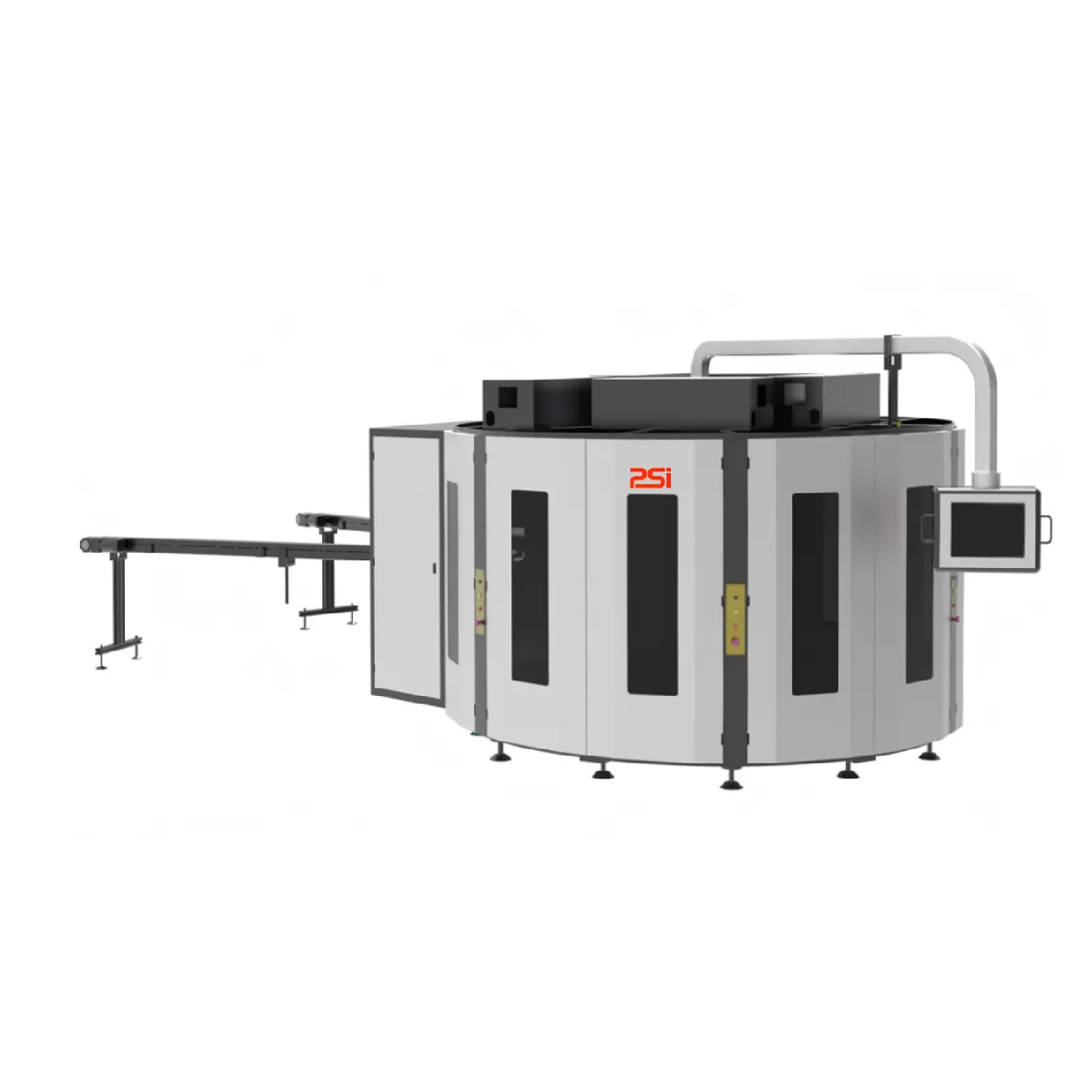
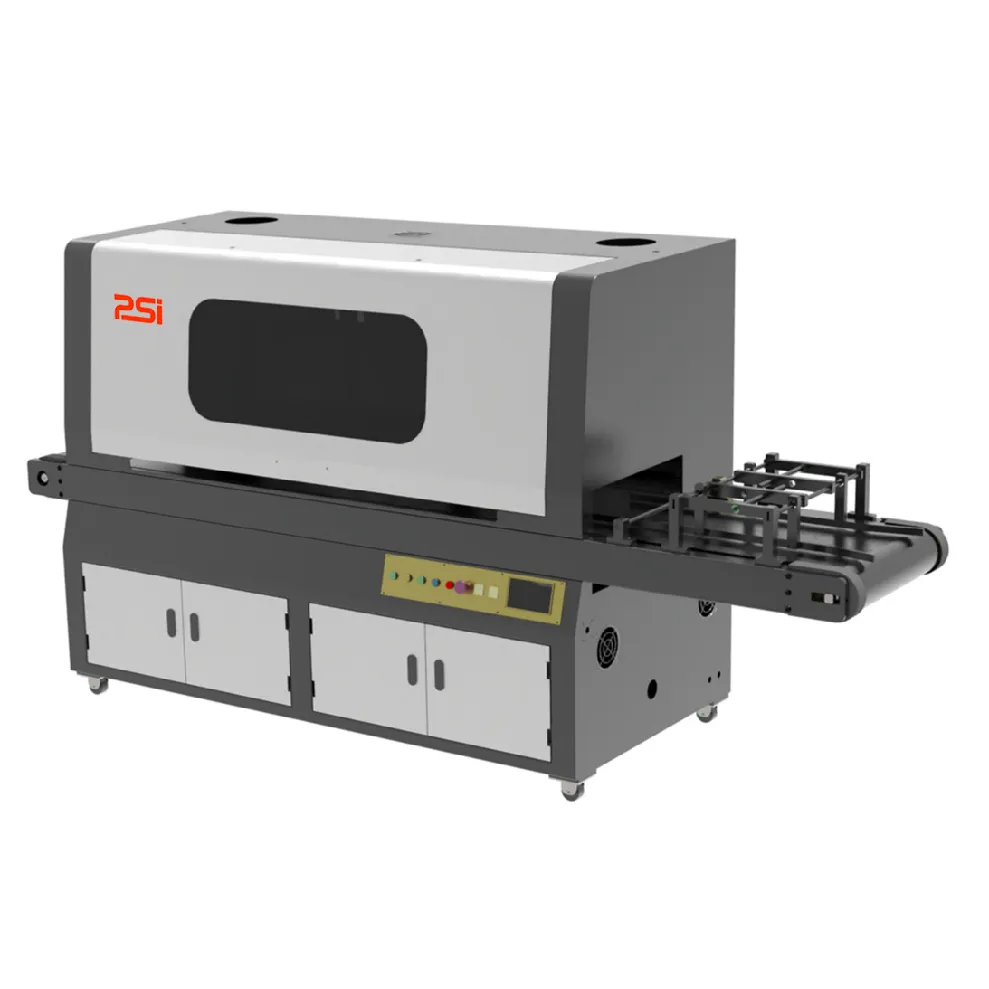
Industrial Inkjet Print Machine: Advanced Digital Printing Solutions for Commercial Applications

Contact me immediately if you encounter problems!

All Categories

industrial inkjet print machine

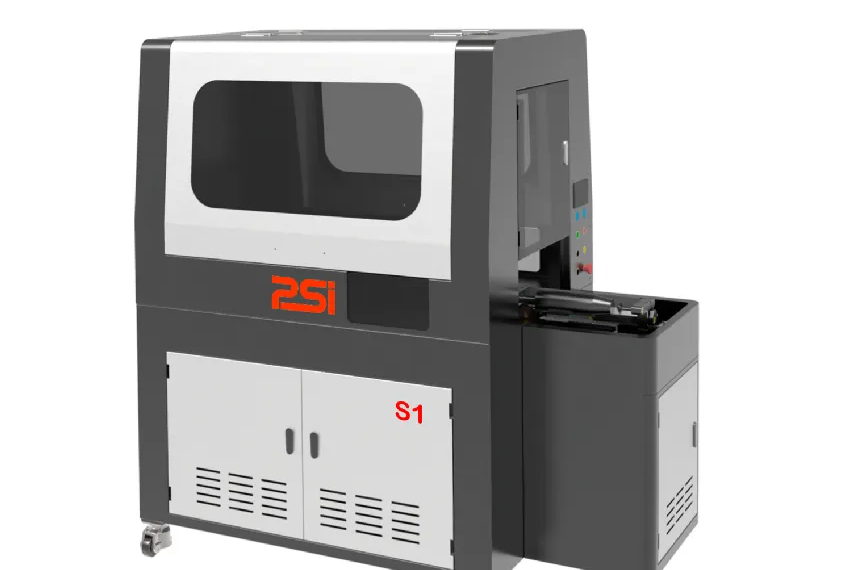
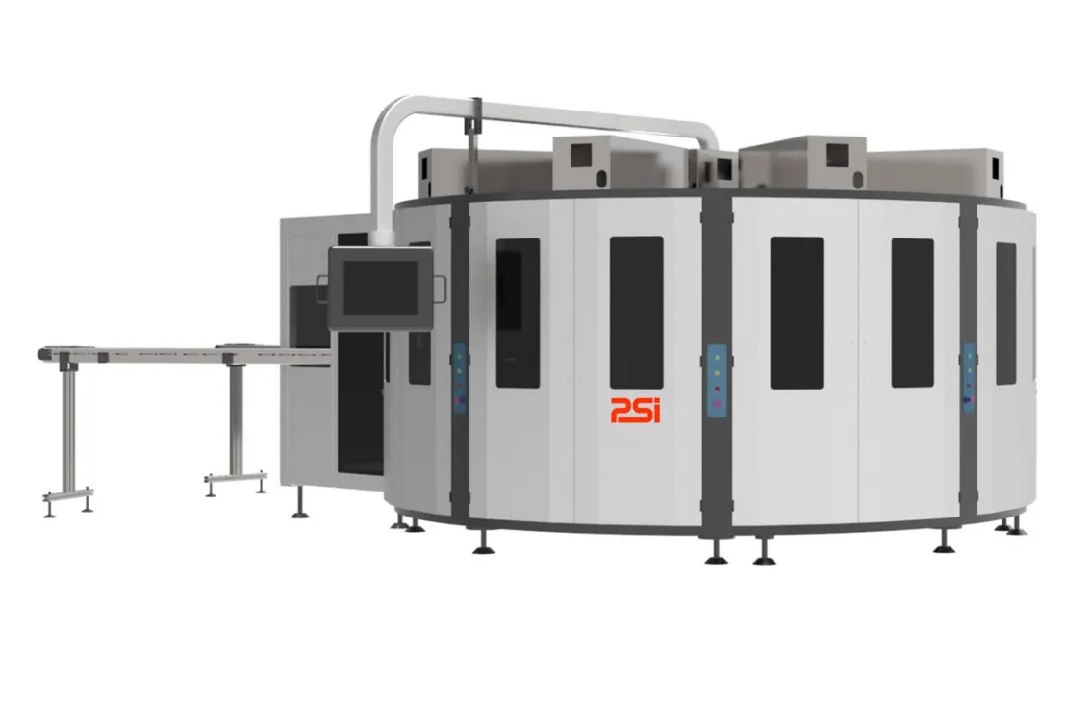
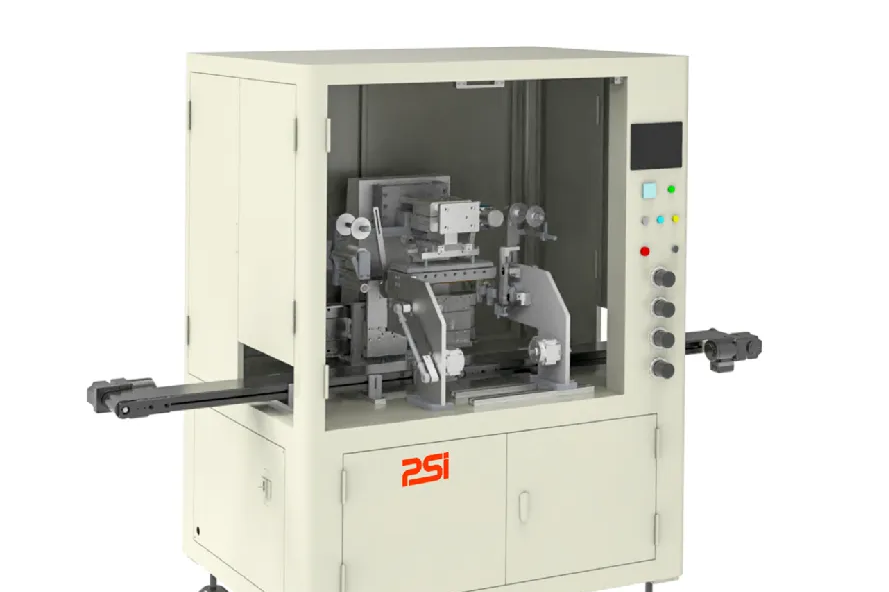
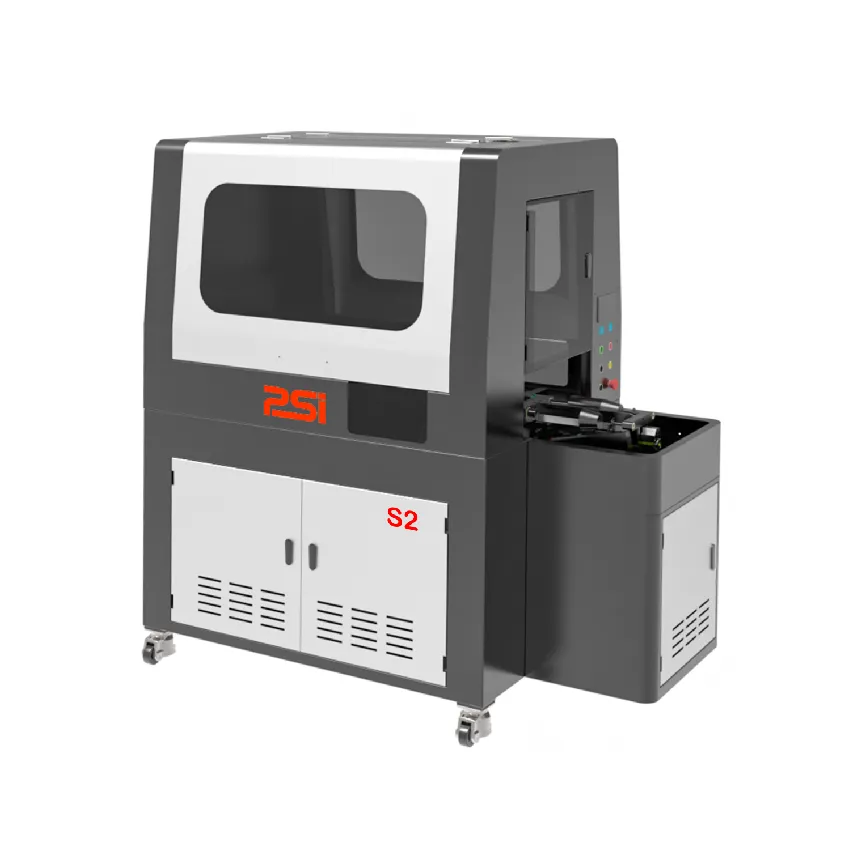
The industrial inkjet print machine represents a revolutionary advancement in modern printing technology, designed specifically to meet the demanding requirements of commercial and manufacturing environments. These sophisticated systems utilize advanced inkjet technology to deliver high-quality printing solutions across various substrates and applications. An industrial inkjet print machine operates by precisely ejecting microscopic droplets of ink onto surfaces through digitally controlled nozzles, enabling exceptional accuracy and consistency in print output. The core functionality centers around digital print heads that can accommodate multiple ink types, including water-based, solvent-based, UV-curable, and specialty inks. The technological architecture incorporates advanced motion control systems that ensure precise positioning and movement across printing surfaces, while integrated software platforms provide comprehensive job management and quality control capabilities. These machines feature robust construction designed to withstand continuous operation in challenging industrial environments, with components engineered for longevity and minimal maintenance requirements. The printing process begins with digital file preparation, where graphics, text, or variable data are processed through sophisticated RIP software that optimizes color reproduction and print quality. Industrial inkjet print machines support diverse substrate materials, from flexible films and textiles to rigid materials like metal, glass, and ceramics. The application spectrum spans packaging, textiles, signage, labels, automotive parts, electronics, and architectural materials. Modern systems incorporate automatic substrate handling mechanisms, real-time quality monitoring sensors, and predictive maintenance algorithms that maximize operational efficiency. The integration capabilities allow seamless connection with existing production lines and enterprise resource planning systems, facilitating streamlined workflow management. These machines deliver consistent results at high production speeds, making them essential equipment for businesses requiring reliable, high-volume printing solutions with exceptional quality standards and operational flexibility.
Popular Products

Industrial inkjet print machines deliver transformative benefits that revolutionize production workflows and business operations across multiple industries. These systems provide unmatched printing speed compared to traditional methods, enabling businesses to complete large-volume orders rapidly while maintaining exceptional quality standards. The digital nature eliminates setup time associated with conventional printing plates or screens, allowing immediate production starts and quick job changeovers that significantly reduce operational downtime. Cost efficiency emerges as a primary advantage, as these machines eliminate expensive consumables like printing plates, screens, or dies while reducing waste through precise ink application and minimal material consumption. The versatility of industrial inkjet print machines extends to substrate compatibility, accommodating materials ranging from paper and cardboard to plastics, metals, ceramics, and textiles without requiring specialized tooling or equipment modifications. Variable data printing capabilities enable personalization and customization at production speed, allowing businesses to create unique products, sequential numbering, barcoding, or personalized marketing materials without interrupting workflow efficiency. Quality consistency remains paramount, with these systems delivering uniform results throughout production runs, eliminating variations common in traditional printing methods and ensuring brand consistency across all printed materials. Environmental benefits include reduced chemical usage, minimal waste generation, and energy-efficient operation compared to conventional printing technologies, supporting sustainability initiatives while reducing operational costs. Maintenance requirements are significantly lower than traditional printing equipment, with fewer mechanical components and advanced diagnostic systems that predict maintenance needs, reducing unexpected downtime and service costs. The compact footprint optimizes floor space utilization while providing extensive production capabilities, making these machines ideal for businesses with space constraints. Integration capabilities allow seamless connection with existing production management systems, enabling automated workflows and real-time production monitoring. Scalability features accommodate growing business needs, with modular designs that allow capacity expansion without complete equipment replacement. The learning curve is minimal, with intuitive interfaces and comprehensive training programs that enable operators to achieve proficiency quickly, reducing training costs and accelerating return on investment.

Latest News

Enhancing Your Brand's Impact with PSI's Cutting-Edge Inkjet Digital Printing Machines

27

Sep

Enhancing Your Brand's Impact with PSI's Cutting-Edge Inkjet Digital Printing Machines

In the domain of industrial digital printing, under the commonly used terminology of the PSI Company, high-quality inkjet digital printing machines have been successfully produced and introduced to a wide range of industries. The performance of the c...
View More
PSI Cutting-Edge Digital Inkjet and Screen Printing Machines

27

Sep

PSI Cutting-Edge Digital Inkjet and Screen Printing Machines

In today's fast-paced business environment, the impact of visual communication cannot be overstated. Brands are constantly seeking ways to stand out and connect with their audience through eye-catching designs and high-quality prints. PSI, a leading ...
View More
PSI Heat Transfer Machines:  in Customized Branding Solutions

27

Sep

PSI Heat Transfer Machines: in Customized Branding Solutions

In the realm of printing and branding, PSI  stands out as a beacon of innovation and excellence. Specializing in heat transfer machines, PSI  offers a range of products that cater to various industries, from textiles to plastics, ensuring t...
View More

Get a Free Quote

Our representative will contact you soon.
Email
Name
Company Name
Message
0/1000

industrial inkjet print machine

Advanced Digital Print Head Technology

Advanced Digital Print Head Technology

The industrial inkjet print machine incorporates cutting-edge digital print head technology that sets new standards for precision, reliability, and performance in commercial printing applications. These sophisticated print heads utilize piezoelectric or thermal inkjet mechanisms that provide exceptional control over droplet formation and placement, ensuring consistent print quality across diverse substrates and production conditions. The multi-nozzle configuration enables simultaneous ink ejection from hundreds or thousands of individual nozzles, creating sharp, detailed images with remarkable speed and accuracy. Advanced nozzle design incorporates anti-clogging features and self-cleaning capabilities that maintain optimal performance during extended operation periods, reducing maintenance interruptions and ensuring consistent output quality. The print head architecture supports various ink formulations, including standard CMYK colors, specialty inks, white inks for dark substrates, and functional inks for specialized applications like conductive printing or security features. Temperature control systems maintain optimal operating conditions for consistent viscosity and droplet formation, while sophisticated filtration mechanisms prevent contamination that could compromise print quality or damage sensitive components. The modular print head design allows individual replacement without affecting other components, minimizing maintenance costs and reducing downtime during service procedures. Variable droplet technology enables precise control over ink volume, creating smooth gradients and fine details while optimizing ink consumption for cost-effective operation. The integration of real-time monitoring systems continuously evaluates print head performance, detecting potential issues before they affect print quality and enabling proactive maintenance scheduling. Advanced algorithms optimize firing patterns and timing to minimize cross-contamination between colors and ensure accurate color reproduction. The print head positioning system incorporates precision linear guides and servo motors that maintain exact spacing and alignment throughout production runs, ensuring consistent print registration and quality. This technological sophistication translates into superior print quality that meets the demanding requirements of commercial applications while providing the reliability and durability essential for industrial environments.
Comprehensive Substrate Versatility and Handling

Comprehensive Substrate Versatility and Handling

Industrial inkjet print machines excel in substrate versatility, accommodating an extensive range of materials with specialized handling systems that ensure optimal print quality and production efficiency across diverse applications. The substrate compatibility extends from traditional paper products to advanced synthetic materials, including flexible films, rigid plastics, metals, ceramics, textiles, and composite materials, providing businesses with unlimited creative possibilities and market expansion opportunities. Advanced substrate handling mechanisms incorporate precision feeding systems that accommodate varying thicknesses, from thin films to rigid boards, while maintaining consistent tension and positioning throughout the printing process. The vacuum hold-down systems ensure flat substrate positioning, eliminating wrinkles or movement that could compromise print quality, while adjustable pressure settings accommodate different material characteristics without causing damage or deformation. Temperature-controlled substrate paths maintain optimal printing conditions for temperature-sensitive materials, ensuring ink adhesion and curing performance regardless of environmental variations. The industrial inkjet print machine features adjustable substrate guides and edge detection systems that automatically align materials for precise print registration, eliminating waste from misaligned prints and ensuring consistent results across production runs. Roll-to-roll capabilities accommodate continuous material processing for high-volume applications, while sheet-fed options provide flexibility for specialized projects or smaller quantities. The substrate pre-treatment systems prepare surfaces for optimal ink adhesion, incorporating corona treatment, flame treatment, or primer application depending on material requirements. Post-printing handling includes drying systems, curing stations, and finishing modules that complete the production process without requiring material transfer to separate equipment. The material database stores optimized settings for various substrates, enabling quick setup and consistent results across different materials while reducing operator training requirements. Automatic substrate detection identifies material types and automatically applies appropriate print settings, eliminating setup errors and ensuring optimal results. The waste reduction features minimize material consumption through precise cutting and edge detection, while recycling systems capture and reprocess unused materials where applicable. This comprehensive substrate handling capability enables businesses to explore new market opportunities and applications while maintaining production efficiency and quality standards.
Intelligent Production Management and Quality Control

Intelligent Production Management and Quality Control

The industrial inkjet print machine integrates sophisticated production management and quality control systems that optimize operational efficiency while ensuring consistent output quality throughout production cycles. The comprehensive software platform provides centralized control over all machine functions, enabling operators to monitor and adjust parameters in real-time while maintaining detailed production records for quality assurance and traceability purposes. Advanced job management capabilities allow scheduling and queuing of multiple print jobs, optimizing production sequences to minimize setup time and material waste while maximizing throughput efficiency. The system incorporates predictive analytics that analyze production patterns and equipment performance to anticipate maintenance needs, preventing unexpected downtime and ensuring consistent production schedules. Real-time quality monitoring utilizes advanced camera systems and spectrophotometers that continuously evaluate print quality parameters including color accuracy, registration, density, and defect detection, automatically making adjustments to maintain optimal output quality. The closed-loop color management system ensures consistent color reproduction across production runs and different substrate types, utilizing automated calibration procedures that maintain color standards without operator intervention. Statistical process control features track quality metrics and generate comprehensive reports that identify trends and potential issues before they impact production quality. The industrial inkjet print machine includes automatic waste detection and rejection systems that identify and remove defective products from the production stream, preventing quality issues from reaching customers while minimizing material waste. Integration capabilities connect with enterprise resource planning systems, enabling automated production scheduling, inventory management, and customer communication throughout the production process. The user-friendly interface provides intuitive access to all system functions while offering different access levels for operators, supervisors, and maintenance personnel, ensuring appropriate control while maintaining security. Remote monitoring capabilities enable off-site supervision and troubleshooting, allowing technical support and management oversight without physical presence at the production facility. The comprehensive data logging system maintains detailed records of all production parameters, quality measurements, and maintenance activities, supporting ISO certification requirements and providing valuable insights for process optimization and customer documentation.